본문바로가기
  • Main
  • Product
  • Body Composition Analyzer
  • ACCUNIQ BC380 PRO

Product

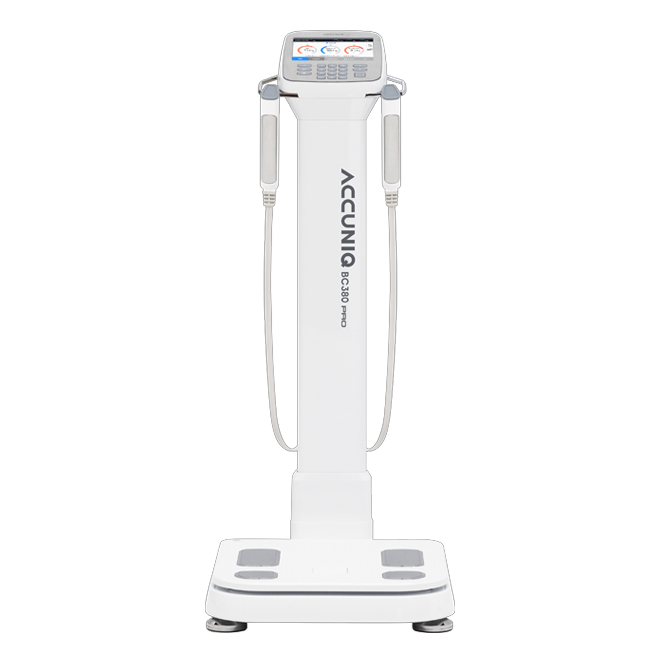
ACCUNIQ BC380 PRO

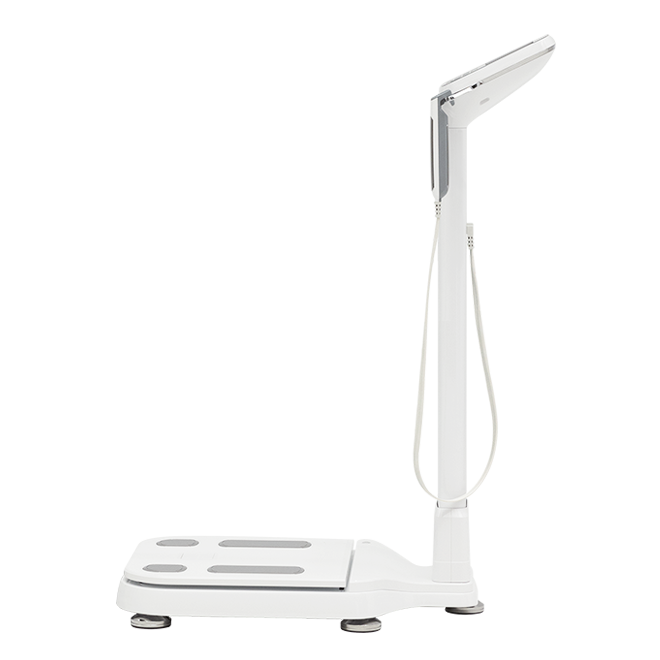
Body composition analyzer providing advanced health indices and comprehensive body circumference evaluation

A body composition analyzer providing simultaneous Phase Angle analysis, sarcopenia assessment (SMI, ASMI), and precise segmental circumference measurements in a single scan.

Purchase Inquiry

Feature

  • High-Precision Body Analysis & Measurements

    Simultaneously analyzes Phase Angle, sarcopenia indicators (SMI, ASMI), and segmental body circumference. The system utilizes 4 frequencies up to 500 kHz to deliver comprehensive body composition results in less than 30 seconds.

  • Three Specialized Report Templates (Optional)

    Three types of reports are provided to meet diverse user needs: body composition reports, body measurement reports, and optional pediatric reports. This comprehensive documentation enables systematic health management, covering body shape variations and developmental progress beyond standard Fat Mass analysis.

  • Non-invasive Phase Angle and Body Cell Mass (BCM) Metrics

    It calculates the Phase Angle, a key indicator of cellular health. In particular, by providing the Body Cell Mass (BCM) value—which is proportional to Protein and Intracellular Water—it offers a scientific basis for assessing the body’s nutritional status and cellular health.

  • Segmental Analysis and Automatic Body Balance Assessment

    It measures Soft Lean Mass and Fat mass in five body regions (Left Arm, Right Arm, Left Leg, Right Leg, and Trunk). The measured data is visualized in a radial chart, allowing you to instantly assess the balance of the upper and lower body as well as the left and right sides.

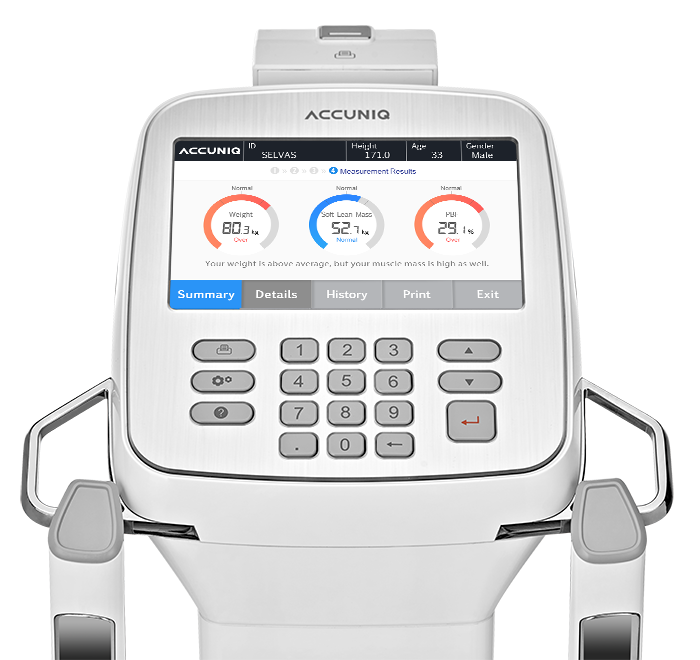
  • 7-Inch Touchscreen & Voice Guidance System

    Equipped with both an easy-to-use 7-inch color touchscreen and a physical keypad to maximize operational efficiency. Multilingual voice guidance messages are provided throughout the measurement process ensure accuracy and convenience.

  • Automatic Integration with Smart Ultrasonic Height Measurer (Optional)

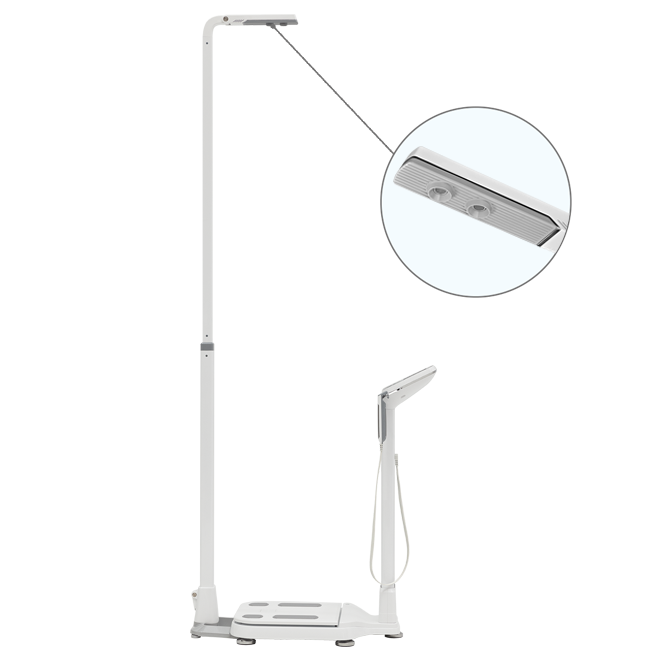
    When integrated with the optional ultrasonic height measurement system (SM104), the device automatically measures height within the 100–210 cm range using an ultrasonic sensor. The measurement is immediately reflected in the system and applied to the Body Composition Analysis results without encountering errors from manual input.

Product Information

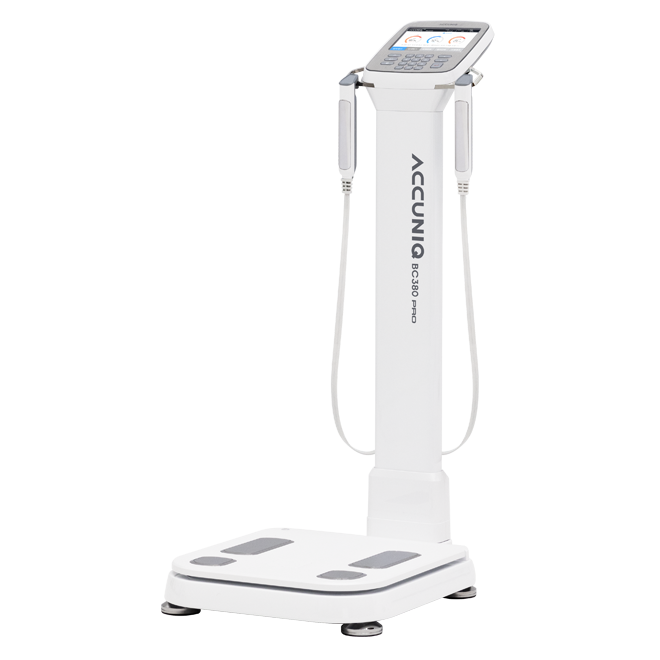
ACCUNIQ BC380 PRO uses 4-channel multi-frequency technology to precisely measure body Impedance. Beyond Obesity Analysis, it provides indicators for sarcopenia (SMI, ASMI) and Phase Angle—a measure of cellular health—in a single measurement. In particular, it calculates body circumference measurements by body region using proprietary algorithms, providing the best clinical baseline data for medical and fitness professionals.


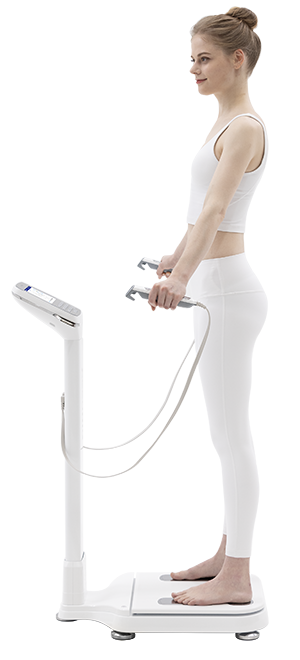
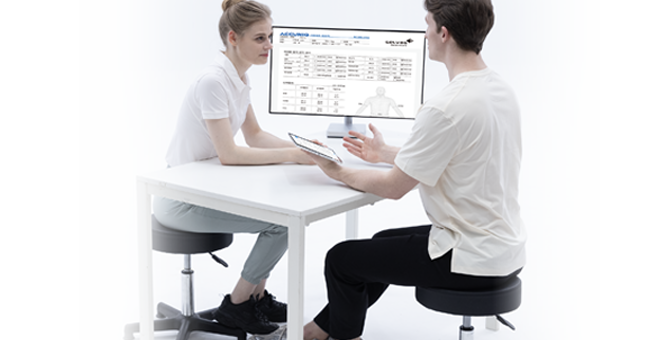
(The height of the model is 170 cm)

Product Support

User Manual
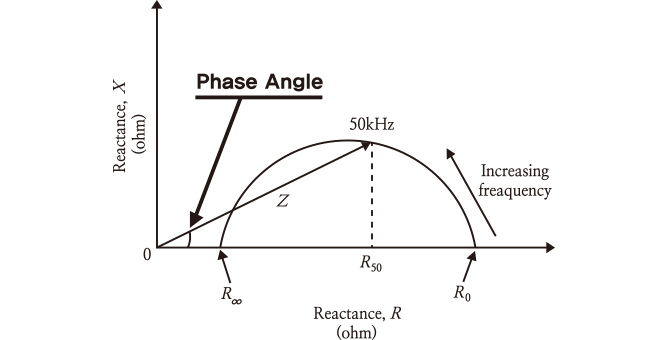
Phase Angle: An Objective Indicator of Cellular Health and Nutritional Status

It provides whole-body and segment-specific Phase Angle data that precisely evaluates the condition of cell membranes.
By calculating Body Cell Mass (BCM) results, which are proportional to Protein Mass and Intracellular Water, it provides a scientific basis for assessing the subject’s overall nutritional status and cellular health.

Calculation of Advanced Muscle Health Assessment Indicators (SMI, ASMI)

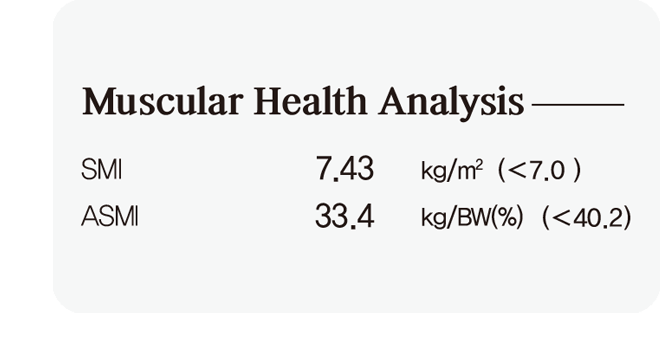
The analyzer calculates the Skeletal Muscle Mass Index (SMI), a key indicator for assessing sarcopenia relative to height. To support a multidimensional muscle health assessment, it also provides the Appendicular Skeletal Muscle Mass Index (ASMI), which represents the ratio of limb skeletal muscle mass to weight.

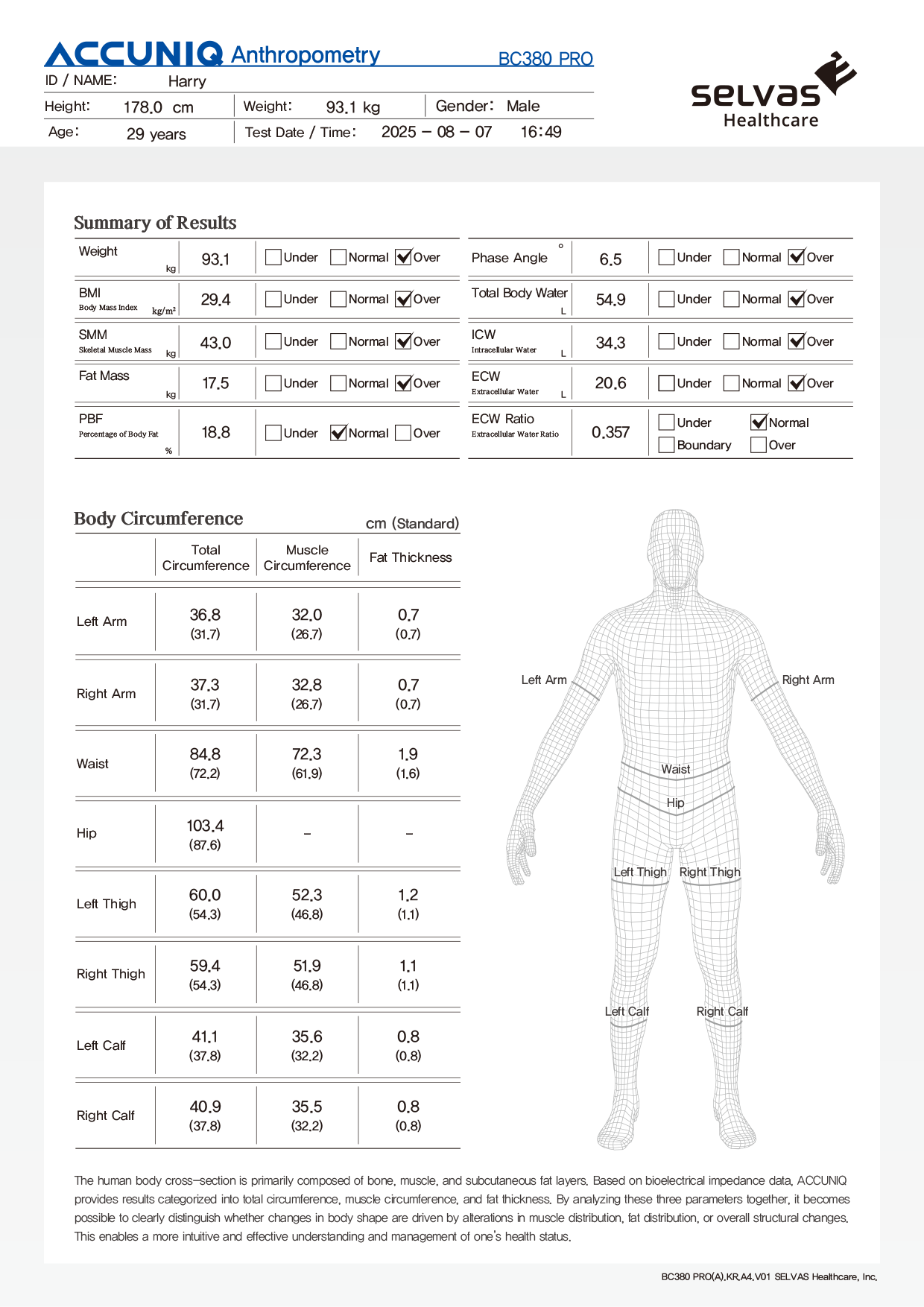
Precise Anthropometry Quantifying Muscle and Fat Thickness (Optional)

The Anthropometry report independently calculates the total circumference of each body part, as well as muscle circumference and fat thickness.
By quantifying subtle fat changes in localized areas that are difficult to detect with the naked eye, this data serves as a precise indicator for identifying body imbalances and changes in body shape.

• ACCUNIQ BCA’s Anthropometry values exhibit a very high correlation of approximately 0.94 with actual measurements taken using a tape measure, ensuring excellent measurement reliability.

Application of Quadruple Multi-Frequency (5–500 kHz) Measurement Technology

It precisely measures the impedance of specific body regions using four frequency bands: 5 kHz, 50 kHz, 250 kHz, and 500 kHz.
This allows for the calculation of body composition components—such as Total Body Water, Protein, Minerals, and Fat Mass—using the scientific Bioelectrical Impedance Analysis (BIA) method.

Intuitive User Interface and Voice Guidance

Equipped with a high-resolution 7-inch touchscreen and keypad on the front panel, the device allows for easy entry of user information (ID, Height, Age, Gender).
Detailed voice prompts guide users through each step, from data entry to the completion of the measurement, ensuring anyone can perform accurate and easy measurements.

Integration with Smart Ultrasound Height Measurer (Optional)

When connected to the optional ultrasonic height sensor, the device automatically measures height within the range of 100–210 cm using a high-precision ultrasonic sensor.
The automatically measured height is immediately incorporated into the Body Composition Analysis algorithm, reducing the hassle of the measurement preparation stage and ensuring data objectivity.

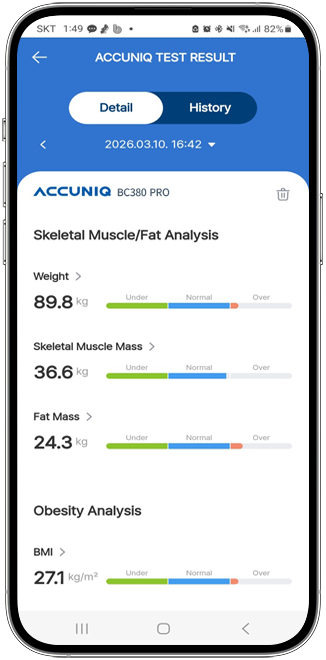
ACCUNIQ Connect Mobile App Integration

After measurement is complete, scan the QR code shown on the touchscreen or result sheet using the dedicated "ACCUNIQ Connect" app to immediately view and manage your health data on your smartphone.

• This mobile app is an additional service designed for the cumulative management and convenience of measurement data.

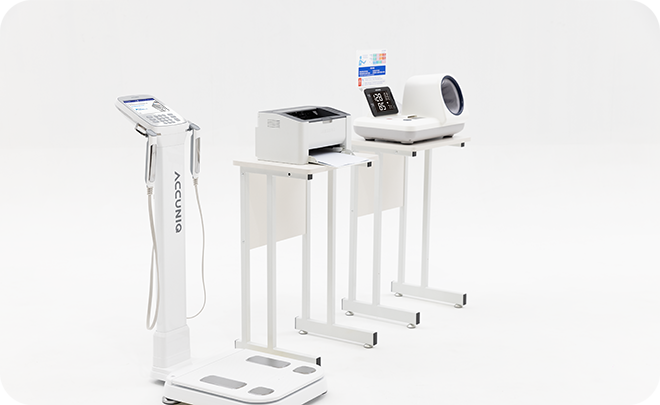
Link to an automatic electronic blood pressure monitor

It provides systolic blood pressure, diastolic blood pressure, pulse, etc. measured through an automatic electronic blood pressure monitor as well as body composition measurement.

List of supported products
BP500, ACCUNIQ BP210, ACCUNIQ BP250, ACCUNIQ BP850

※ This product is an optional product sold separately.

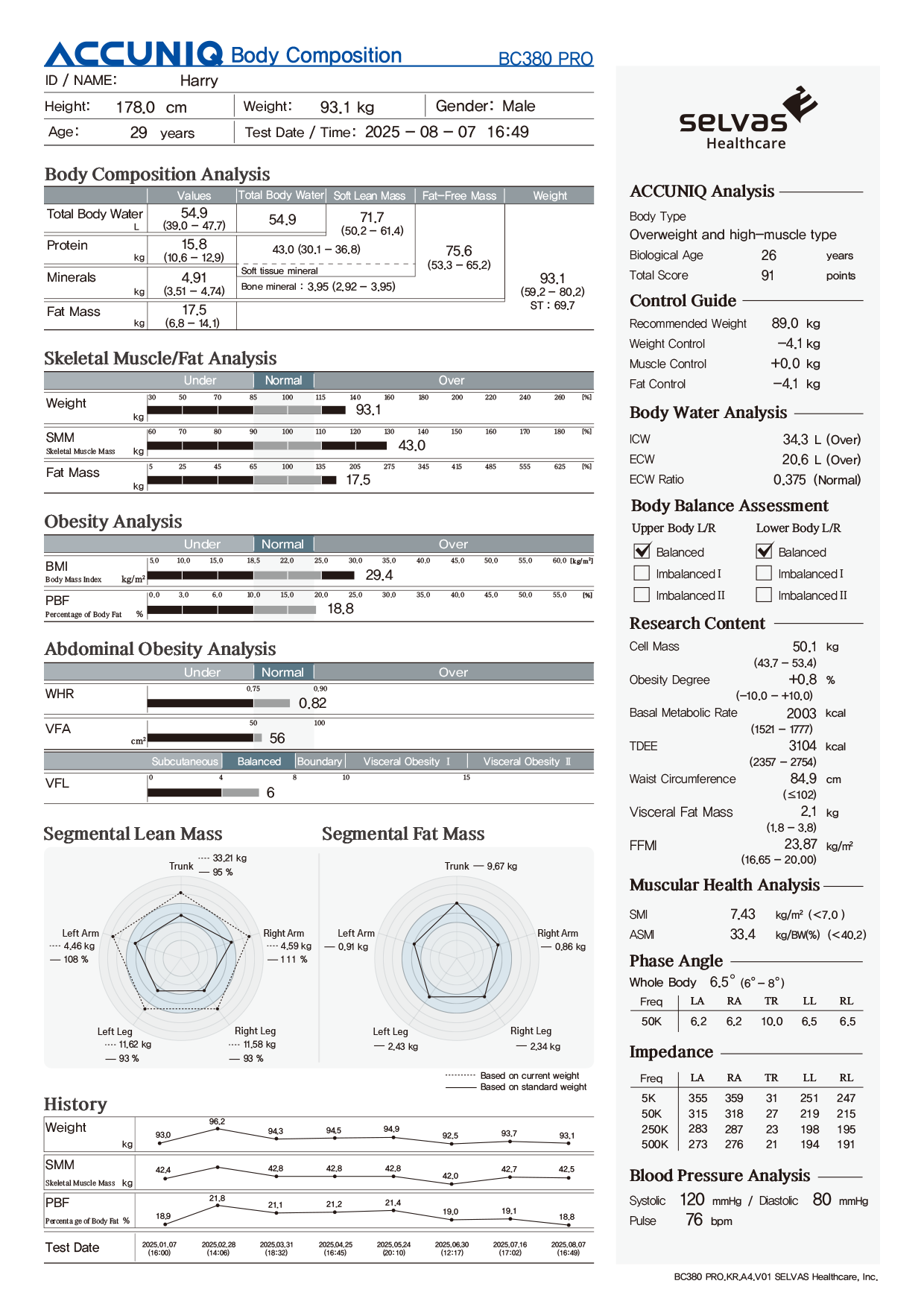
Items provided in the body composition result sheet
  • 1

    Body Composition Analysis

    Analyzes core components including Total Body Water, Protein, Minerals, and Fat Mass. These metrics serve as fundamental indicators for assessing overall health status.

  • 2

    Muscle / Fat Analysis

    Displays Body Weight, Skeletal Muscle Mass, and Fat Mass in a graph format. This allows for an immediate comparison of the ratio between muscle and fat within total weight.

  • 3

    Obesity Analysis

    Provides BMI and Percentage of Body Fat (PBF), the primary indicators for obesity assessment. Analyzing both external physique (BMI) and actual fat distribution (PBF) ensures a precise evaluation.

  • 4

    Abdominal Obesity Analysis

    Evaluates abdominal fat accumulation through three specialized metrics: Waist-to-Hip Ratio (WHR), Visceral Fat Area (VFA), and Visceral Fat Level (VFL).

  • 5

    Segmental Analysis

    Independently analyzes Muscle Mass and Fat Mass for five body segments: left/right arms, trunk, and left/right legs. Data supports targeted exercise prescription and rehabilitation by identifying regional imbalances.
    - ASM (Appendicular Skeletal Muscle Mass): Represents the total skeletal muscle mass of the four limbs.

  • 6

    History

    Tracks changes in Weight, Skeletal Muscle Mass (SMM), and PBF over time. The graph displays data from the eight most recent measurements to monitor physical trends.

  • 7

    ACCUNIQ Evaluation

    Synthesizes measurement data to provide a body type classification, Biological Age, and a Total Score for a comprehensive health overview.

  • 8

    Control Guide

    Suggests target adjustment values for weight, fat, and muscle mass based on the user's age and current status . Values indicate recommended increases (+) or decreases (–).

  • 9

    Body Water Analysis

    Calculates Total Body Water (TBW) by combining Intracellular Water (ICW) and Extracellular Water (ECW). Proper water balance is essential for nutrient delivery and metabolic waste removal.

  • 10

    Body Balance Assessment

    Evaluates symmetry between the upper/lower body and left/right sides. Results are categorized as Balanced, Imbalanced I, or Imbalanced II.

  • 11

    Research Content

    Provides advanced clinical data, including Body Cell Mass (BCM), Basal Metabolic Rate (BMR), Total Daily Energy Expenditure (TDEE), and Fat-Free Mass Index (FFMI).

  • 12

    Muscle Health Assessment

    Analyzes limb muscle development to provide baseline data for sarcopenia evaluation.
    - SMI (Skeletal Muscle Mass Index): Limb muscle mass relative to height (kg/m²).
    - ASMI (Appendicular Skeletal Muscle Mass Index): A corrected index representing the ratio of limb muscle mass to weight.

  • 13

    Phase Angle

    Acts as a non-invasive indicator of nutritional status and cellular health. Healthy cell membranes create higher resistance at 50 kHz, resulting in a higher Phase Angle.

  • 14

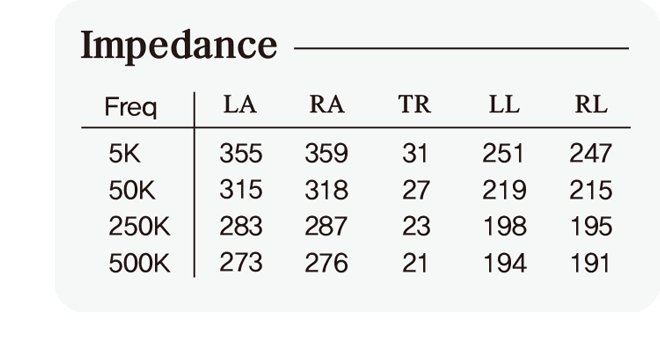
    Impedance

    Displays electrical resistance values for five body parts across multiple frequencies (5 kHz to 500 kHz). Consistent values across measurements verify the accuracy and reproducibility of the device.

  • 15

    Blood Pressure Results

    Measured blood pressure data is displayed when a compatible blood pressure monitor is connected to the analyzer. Linking weight and blood pressure data provides a more comprehensive overview of cardiovascular and metabolic health.

  • 16

    Other Items

    - Clothes Weight (PT): This feature allows the weight of the user's clothing to be subtracted from the total measured weight for greater accuracy.
    - Display Format: The adjusted value appears as "PT: -0.kg" at the top right of the body composition chart.
  • 1

    Anthropometry

    Provides a detailed analysis of the body cross-section, which consists of bone, muscle, and fat layers.Utilizes impedance data from the arms, waist, hips, legs, and calves to categorize results into total circumference, muscle circumference, and fat thickness. Enables clear distinction between changes driven by muscle distribution, fat distribution, or overall structural shifts. Supports intuitive health management by providing localized data for identifying body imbalances.

  • 2

    Weight

    Measured weight is displayed in kilograms (kg) alongside a recommended target range.

  • 3

    Body Mass Index (BMI)

    Calculated by dividing weight (kg) by height squared (m²).Analyzing both external characteristics (BMI) and the distribution of fat (PBF) ensures a precise obesity assessment.

  • 4

    Skeletal Muscle Mass Index (SMI)

    Represents limb skeletal muscle mass relative to height (kg/m²).Serves as a primary clinical indicator for evaluating sarcopenia.

  • 5

    Percentage of Body Fat (PBF)

    Represents the proportion of fat mass relative to total body weight. Standard ranges are defined as 10–20% for men and 20–30% for women.

  • 6

    Fat Mass

    Categorized into essential and stored fat for obesity analysis. Used in conjunction with BMI to provide a detailed diagnosis of body fat levels.

  • 7

    Phase Angle

    Acts as a non-invasive metric reflecting nutritional status and cellular integrity. Measured at an optimal frequency of 50 kHz. Healthy cells generate high resistance through the cell membrane, resulting in higher Phase Angle values.

  • 8

    Total Body Water

    The amount of water in the body is displayed as L and the target value.

  • 9

    Intracellular Water (ICW)

    Water located inside cells, comprising two-thirds of total body water. Supports critical cellular functions, including protein synthesis, energy production, and nutrient transport. Facilitates waste excretion and maintains electrolyte balance.

  • 10

    Extracellular Water (ECW)

    Water located outside cells, making up one-third of total body water. Delivers oxygen and nutrients from blood to tissues. Transports waste products to the blood for excretion via lungs and kidneys.

  • 11

    Extracellular Water Ratio (ECW Ratio)

    Proportion of extracellular water relative to total body water. High ratios suggest excessive leakage of intracellular water into extracellular spaces. Key indicator for monitoring post-surgical recovery, intense exercise, or physiological cycles. Serves as clinical data for evaluating edema linked to circulatory issues.

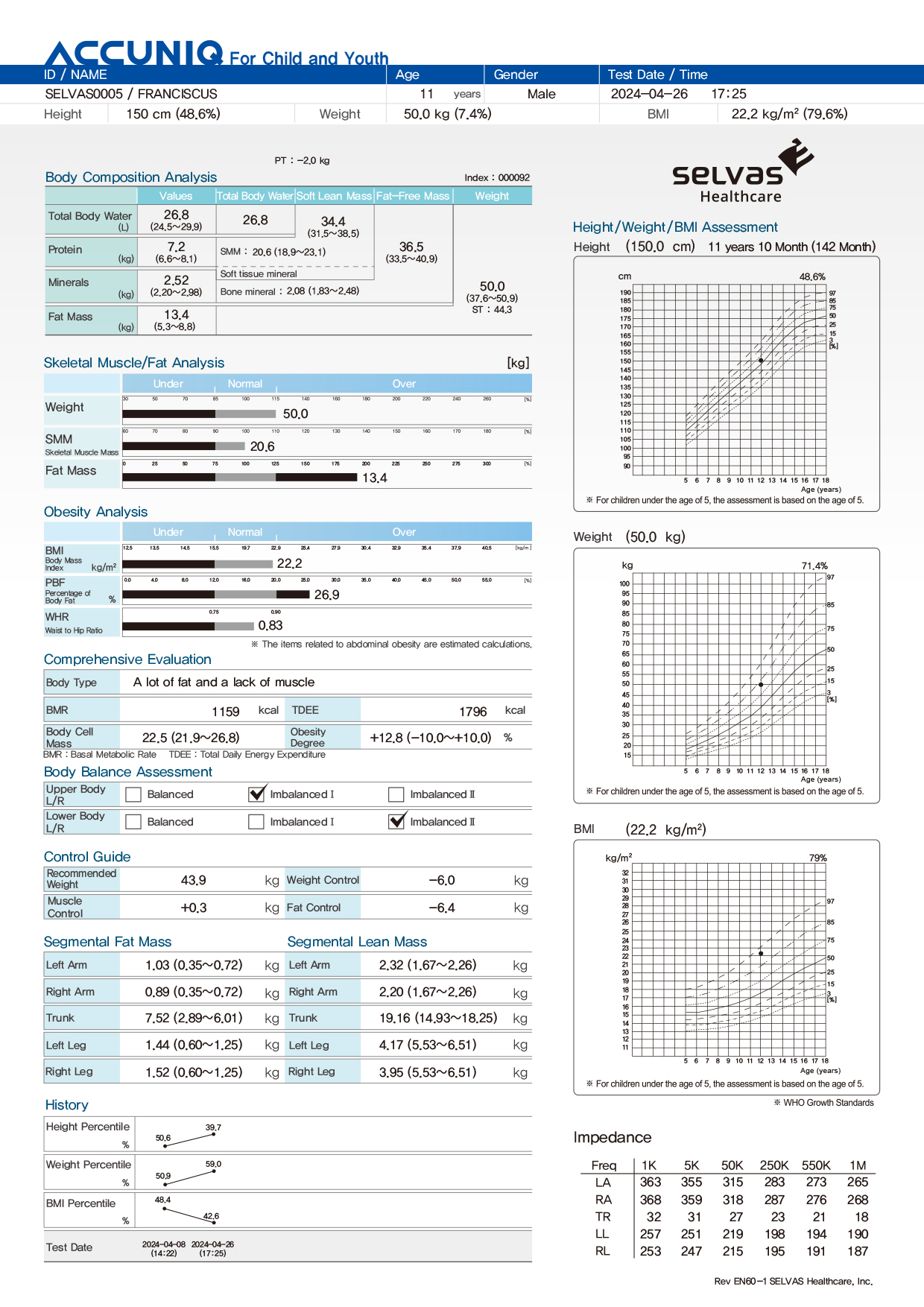
  • 1

    Body Composition Analysis

    Lists measurement results and recommended values for Total Body Water, Protein, Minerals, and Fat Mass.

  • 2

    Skeletal Muscle/Fat Analysis

    Compares Body Weight, Skeletal Muscle Mass (SMM), and Fat Mass against recommended ranges.
    SMM represents bone-attached muscles, making up about 60% of total soft lean mass.
    Fat Mass, combined with BMI, serves as a key indicator for obesity diagnosis.

  • 3

    Obesity Analysis

    Graphs BMI, PBF, and Waist-to-Hip Ratio (WHR) for assessment. Combined analysis of physical traits (BMI) and fat distribution (PBF) ensures accurate obesity evaluation.

  • 4

    Comprehensive Evaluation

    Includes body type classification, BMR, TDEE, Body Cell Mass (BCM), and Obesity Degree.

  • 5

    Body Balance Assessment

    Evaluates Upper and Lower Body L/R symmetry across three levels: Balanced, Imbalanced I, and Imbalanced II.

  • 6

    Weight Control

    Presents total target adjustment by combining Fat and Muscle Control targets. Negative values (-) indicate recommended loss, while positive values (+) indicate recommended gain.

  • 7

    Segmental Fat & Muscle Mass

    Breaks down Fat and Lean Mass by body region (arms, legs, trunk) with normal ranges provided in parentheses.

  • 8

    Growth Assessment (Height/Weight/BMI)

    Plots individual growth against percentile curves for children and adolescents .Based on standard pediatric growth charts, the 50th percentile represents the normal physical growth index. Allows for comparison and prediction of physical development relative to age peers.

  • 9

    Impedance

    Displays body part-specific resistance values measured at various frequencies. Provides unique individual values generated as electric current passes through the body.

Product specifications
Measurement (electrode) Method
4-electrode method using 8 contact electrodes
Measurement items
4types of frequency (5kHz, 50kHz, 250kHz, 500kHz)
Whole body and 5 segments (Left arm, Right arm, Left leg, Right leg, Trunk)
Weight Measurement Range
Maximum 250 kg
Product Weight
Main Body: Approximately 18.0 kg
With Ultrasonic Height Meter (Optional): Approximately 21.4 kg (Main body 18.0 kg + Height meter 3.4 kg)
Input Interface
7-inch Touch LCD, Keypad
Connectivity (Transmission)
USB 2.0 terminal, RS-232C serial port, Wireless communication port (Optional), Ethernet (Optional), Bluetooth® LE / Bluetooth® connectivity available through the RCPORT-TD420 Serial Remote Device(Optional)
Result Output
7-inch LCD screen, A4 result sheet, thermal result sheet, data management program (ACCUNIQ Manager for Windows), mobile app (iOS, Android), web page
Basic Components
Main body, USB memory (user manual and data management program), power cable and adapter, USB cable, M6 bolts, 4mm hexagon wrench, body hinge cover
Optional Items
Result sheet for child, Result sheet for Anthropometry, Automatic electronic blood pressure monitor, blood pressure monitor cart, USB memory, thermal printer and thermal paper, Bluetooth® LE / Bluetooth® connectivity available through the RCPORT-TD420 Serial Remote Device, Ultrasonic height meter SM104
Use purpose
A device that calculates body fat by giving energy to the human body by the impedance method

※ The above information is subject to change without notice to improve appearance
and product performance.

※ This product is a ‘medical device’, so please read ‘Precautions for use’
and ‘How to use’ carefully before use.